The Room Is Listening Too: How British Galleries Tune the Sound of Staying
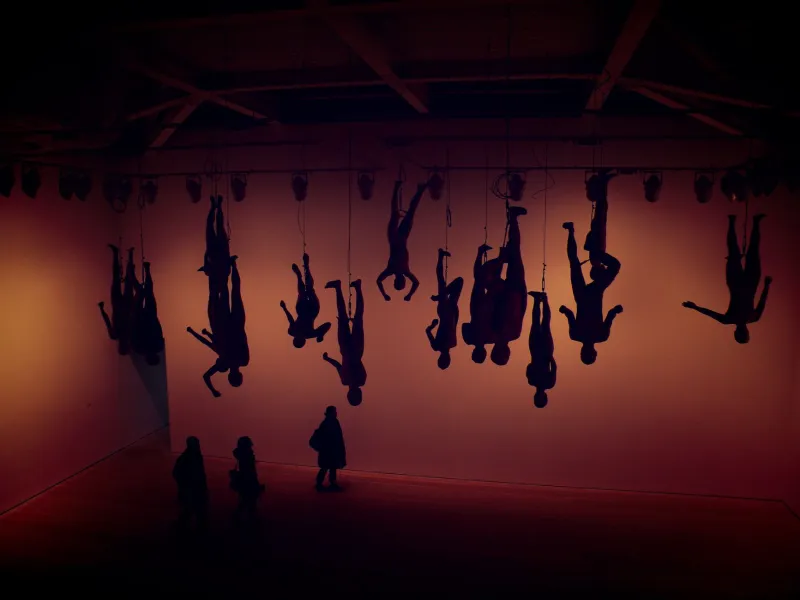
Walk into a UK gallery and the first thing that greets you is rarely a painting. It is the air: a low electrical hum, a strip light ticking, the distant clack of an invigilator's lanyard. We talk about wall texts and lighting grids, but the soundtrack of an exhibition is doing quiet structural work. It sets your pace, decides where you pause, and occasionally nudges you back out of the door.
The first wall is made of air
Sound is exhibition architecture. A room with a slow, dubby loop and a bench will hold people longer than a corridor with bright, lyric-heavy pop. Curators know this, even when they do not use the word soundtrack. They talk about dwell time, transition, threshold. They worry about echo in old civic galleries, about parquet floors and high ceilings, about the fact that a whisper can travel from the front desk to the far wall and arrive with a personality.
The best exhibition sound does not announce itself as a playlist. It behaves more like lighting: you notice it when it is wrong. A hard-edged track in a room of delicate works can make the art feel like a backdrop. A muddy drone in a space with too much soft furnishing can disappear entirely. The sweet spot is often a texture you can drift in and out of, with enough variation to stop the brain from filing it as background noise.
Silence is a material, and it leaks
Silence is never silent in Britain. There is the HVAC, the rain on a skylight, the Number 42 outside, the fridge in the office, the person who has decided this is the room for a phone call. Good galleries treat silence as a material rather than an absence. They add acoustic felt, heavy curtains, carpet, baffles. They place sound works away from the lift. They accept that a room is a leaky vessel and work with the leaks instead of pretending they are not there.
Field recordings are a popular solution because they blur the line between the gallery and the world outside. Pebbles turned over on a Sussex beach. Wind on Dartmoor. Buses on Oxford Road. A kettle in a studio. The Radiophonic Workshop legacy is still audible in this instinct: Daphne Oram and Delia Derbyshire taught British artists that electronic sound could be domestic, strange and quietly theatrical, all at once. That inheritance is in every low, warm hum that makes a white cube feel less like a showroom and more like a place someone has been thinking in.
Why some rooms ask you to stay
Tempo is the obvious lever, but timbre matters just as much. A 60bpm loop with no lyrics and a bit of room reverb says: take your time. A track with a big chorus says: this is a trailer. Neither is inherently wrong, but they ask different things of the body. The gallery soundtrack should leave holes for looking. It should not fill every silence with a feeling before the visitor has had a chance to find their own.
I have come to think of the ideal exhibition sound as a host who knows when to leave the room. It is there when you arrive, it makes the first minute less awkward, and then it steps back. If it is still performing at you twenty minutes later, you leave with the impression of the music rather than the art. That is not a failure of taste. It is a failure of hospitality.
A practical note: building a better private-view playlist
Private views are a different beast. The conversation is the main event, the wine is lukewarm, and the playlist has to survive clinking glasses and someone saying, 'Sorry, are you on the mailing list?' Here is a workable approach for a 2026 side project, studio opening or zine launch.
- Start quieter than you think. The first hour is for arrival and low-level chatting. Let people hear each other.
- Avoid lyrics and big hooks until later. If you must have a belter, put it near the end, when the room has thinned and the remaining people are your actual friends.
- Match the reverb to the room. A cavernous railway arch can take sparse, dubby material. A carpeted community hall needs less bass and more mid-range warmth.
- Build a 20-minute loop with small variations, not a three-hour algorithmic drift. You want a mood, not a journey through your streaming history.
- Include one oddity. A field recording from the making of the work, a local radio ident, a bit of incidental hum. It gives the evening a signature.
- Test it with people in the room, not headphones in the kitchen. Volume is social. If the playlist makes people lean in to hear each other, it is too loud.
- Credit the sound designer or the person who made the playlist. It is part of the show, not a favour.
The accidental hum
Some of the best gallery sound is unplanned. The radiator that clicks on at 11am. The neon sign with a buzz like a trapped wasp. The floor that announces every step. The invigilator's chair. Artists sometimes record these and play them back, which can feel like a clever trick until you realise it is also just honest. A gallery is a building, not a vacuum. The accidental hum is part of the atmosphere, and pretending otherwise makes the whole thing feel less alive.
The room is listening too
Next time you are in a UK gallery, stand still for thirty seconds before you look at the first thing on the wall. Listen to what the room is doing. Is it asking you to slow down, to move on, to stay a while? The soundtrack of an exhibition is rarely the headline, but it is often the reason you remember the room. Curate it like you mean it, and the art gets a better chance to speak. Ignore it, and you are leaving one of the most powerful tools in the building to the radiator.