Papering the Walls: Britain’s Private View Cards and the Art of Keeping Them

Photo: Unknown authorUnknown author, Public domain, via Wikimedia Commons
The private view card is the art world’s most efficient format: one night, one image, one address, one tiny typographic panic. It arrives by post, gets pinned to a studio wall, migrates to a tote bag, and usually ends up softening in a kitchen drawer. Which is a shame, because the invitation often has a longer afterlife than the show it announces.
Britain is unusually good at this stuff. Our project spaces, artist-run galleries and stubbornly independent noticeboards produce invitations that are part advertisement, part love letter, part last-minute compromise. A photocopied A6 in Glasgow, a letterpressed card in Margate, a hand-stamped scrap in Peckham: these are free art ephemera, and they are quietly becoming the most collectable thing in the room.
The card that outlives the show
Exhibitions close. The private view card stays on the shelf. It records the hang, the typography, the names, the mood, sometimes the exact shade of optimism that preceded a show. It is also refreshingly unpretentious. No one is asking you to understand it; it is asking you to turn up, drink something cheap, and look.
The best ones have a bit of friction. They are over-printed, under-trimmed, or printed on stock that feels like it was chosen by someone who knew the show was going to be good but the budget was going to be small. They carry the fingerprints of their making. That is the appeal.
What to look for beyond a free drink
Start with the obvious: does the card do something a screenshot cannot? Risograph texture, a weird fold, a spot colour that lands slightly off-register, a back that lists every artist in type so small it feels like a secret. These are the details that make a card worth keeping rather than recycling.
Then look at the information. A good private view card tells you where to go and what to expect without over-explaining. It has a date, an address, a time, and a tone. If it reads like a corporate invitation to a property launch, leave it. If it reads like someone typed it at 11pm and printed it at 8am, keep it.
Finally, trust your eye. You do not need a thesis. If the card makes you want to see the show, it has already done its job. If it makes you want to keep it after the show closes, it has done something better.
Storage: the shoebox is not a strategy
A pile of cards in a shoebox is not a collection; it is a future damp problem. Britain’s humidity is patient and creative. Card warps, corners fur, ink offsets. If you want to keep this stuff, give it half a chance.
A simple archival box is fine. So is a ring binder with glassine sleeves, or a flat file if you are the sort of person who owns a flat file. Keep them out of direct sunlight, away from radiators, and away from the kitchen. Sort by date or by venue, not by vibes. Vibes are for the wall; dates are for the box.
Do not over-handle them. Do not laminate them. Do not tape them into a scrapbook unless you have made peace with the tape. If a card is genuinely special, sleeve it and leave it alone. The goal is not to preserve every free postcard like a museum object; it is to keep the good ones in a state where you can still enjoy them.
Display: salon, strip, or single hero
The temptation is to cover a wall in cards and call it a salon hang. Resist, at least at first. A dense grid of identical A6 cards can look like a stationery cupboard exploded. A better approach is to treat them like a small, rotating exhibition.
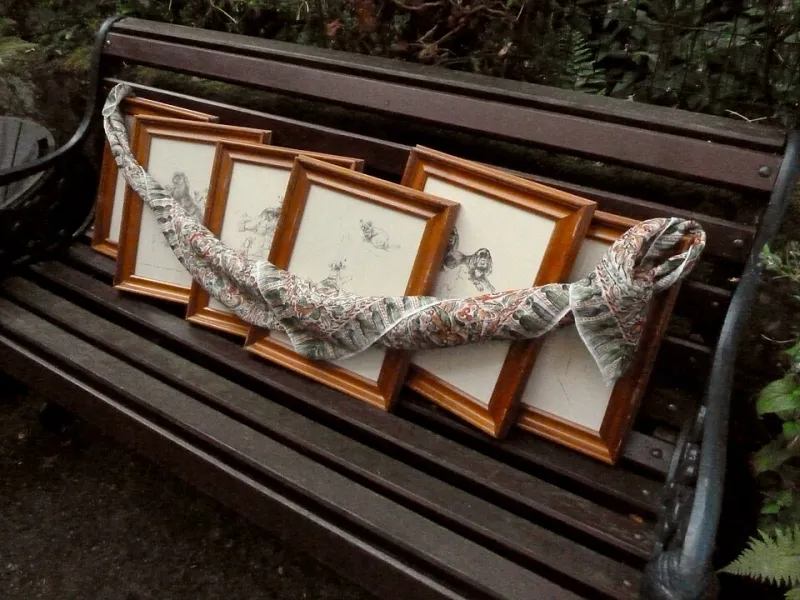
Option one: the single hero. Pick one card, frame it properly with a mount, and let it breathe. A cheap frame with a decent mount can make a risograph look intentional. Option two: the strip. Five or six cards in a row, aligned by top edge, hung at eye level. This works especially well in a hallway or above a desk. Option three: the pinned cluster. Blu-Tack is acceptable if you accept the consequences. Magnetic strips are neater. Either way, rotate the cluster every few months so the wall does not become wallpaper.
Avoid direct sunlight. Avoid damp walls. Avoid hanging them above a kettle. The British flat is a hostile environment for paper; act accordingly.
Where to find them without being annoying
Private view cards are free, but they are not a public service. Ask at the front desk. Check the noticeboard by the door. Look in the crate under the table at artist-run spaces, the one that says ‘take one’ and is mostly flyers for a life-drawing class. Go to private views, yes, but also go to the shows after the private view, when the stack is still there and the room is quieter.
Do not take fifty. Do not take the last one if someone else is looking at it. Do not treat a small gallery like a free paper supplier. The etiquette is simple: take one, take a photo of the rest, and leave some for the people who actually came to see the art.
A small manifesto for free art
The private view card is not a substitute for the exhibition. It is a receipt for your attention. It says you were there, or you meant to be, or you liked the typeface enough to take it home. In a culture that keeps telling us to declutter, there is something quietly radical about keeping a flimsy piece of card because it made a night feel possible.
So keep a few. Store them properly. Put the best ones on the wall. Let the rest go. And next time you see a stack by the door, take one and read the back. The show might be over, but the card is just getting started.