The Frame Is the Art: Building a Gallery Wall Without the Student Flat Energy
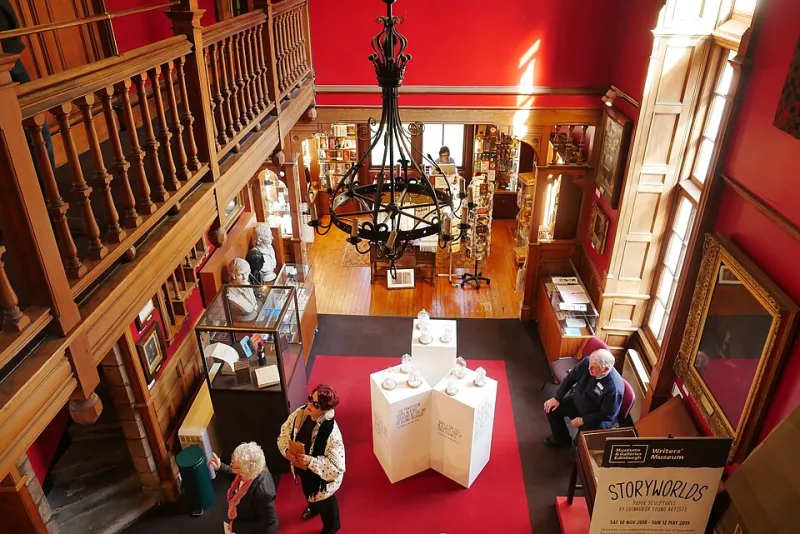
Photo: mismatched vintage picture frames gallery wall charity shop finds, via ecdn.teacherspayteachers.com
Every gallery wall goes wrong in the same way. Somebody buys six matching frames from a homeware aisle, prints six things that share a colour scheme, hangs them in a perfect grid, and ends up with a wall that looks like a waiting room in a dental practice that has recently rebranded.
Here is the alternative, and it costs less: buy the frame, not the picture. Buy it second-hand, buy it badly, buy it because the moulding is nice. Then spend a year finding things to put in it.
The frame is the thing
A mediocre picture in a good frame looks intentional. A good picture in a cheap frame looks like a poster you never got round to sorting out. This is not fair, but it is true, and it is the single most useful fact in home decoration.
So when you're in a charity shop, ignore the image entirely and look at the joinery. Solid wood with a bit of weight, a decent rebate, glass without a scratch, a mount that hasn't gone brown at the edges. Anything gilt and slightly chipped? Take it. Anything 1970s with a deep profile and a bit of heft? Take it. You can always put something else in it, and a frame that has clearly lived a life does more for a wall than anything new.
Where to look, roughly in order of reward
House clearance auctions. The unglamorous end of the saleroom, where box lots go for the price of a round of drinks and half of it is framed. Check the condition report photographs carefully; assume the glass is cracked and budget for it.
Car boot sales. Arrive before eight, bring cash, carry a tape measure. The best frames are usually the ones propped against a van with a faded print of a loch in them.
Charity shops, particularly the big furniture ones. Avoid the framed prints near the till, which are always the same three landscapes. Look at the back of the shop, where the odd donations end up.
Facebook Marketplace, collection only. The magic words. Anything that says 'must collect, it's heavy' is usually a decent frame with a bad picture in it.
House clearance vans and skip-adjacent skips. Ask first. Be normal about it.
The three-tier method
A wall that works has three kinds of thing on it, and they should not match.
-
One properly framed piece. Spend actual money here — a decent mount, proper glass, done by someone who knows what they're doing. This is the anchor, the thing your eye lands on, the reason the rest looks deliberate rather than accidental.
-
Two or three odd things. A found photograph. A page torn from a 1960s annual. A piece of textile. A small, strange drawing from a degree show. These do the personality work.
-
The filler. Envelopes, postcards, a ticket stub, a label from a coffee bag, a photocopy of something you like. Cheap, replaceable, and the reason the wall looks alive rather than curated.
Mix sizes aggressively. Nothing kills a wall faster than four frames of identical dimensions hung at identical heights.
The hanging bit everyone gets wrong
Hang the centre of the arrangement at roughly eye level — around 145cm from the floor is the standard figure, and it holds up. Space frames between five and eight centimetres apart, closer than feels comfortable when you're standing there with a pencil.
Lay the whole thing out on the floor first. Photograph it. Live with the photograph for a day. You will spot the weak corner immediately, and it is much easier to move a frame on a floor than on a wall.
Use proper fixings. A heavy frame on a plasterboard wall with a single picture hook is a two-in-the-morning phone call waiting to happen.
What to avoid, bluntly
Sad beige prints of abstract shapes with names like 'Drift'. Anything with a motivational sentence in a script font. Mirrored trays masquerading as art. Frames containing the word 'Family' in vinyl lettering. Anything that came from the same aisle as a diffuser. And, at car boots, the framed commemorative plates — no, not even ironically, not even in the downstairs loo.
The one thing worth spending on
Get one piece properly framed. Not the whole wall — one. A good framer will talk you out of the wrong mount, sell you a bit of conservation board, and make something cheap look like it belongs in a small museum. In the UK you'll pay for it, so choose the piece you'd rescue in a fire and let the rest fend for themselves.
Your Saturday shopping list
Cash, a tape measure, a soft bag, a list of wall dimensions, and a ruthless eye for a nice bit of wood. Give yourself a budget of twenty quid and see what happens. The wall you want isn't the one you plan; it's the one that accumulates, one odd find at a time, and looks like somebody with taste has been quietly at it for years.
Which, if you do it properly, is exactly what has happened.