Concrete, Clatter and Cheap Rent: The Art Spaces Growing Under Britain's Railway Lines
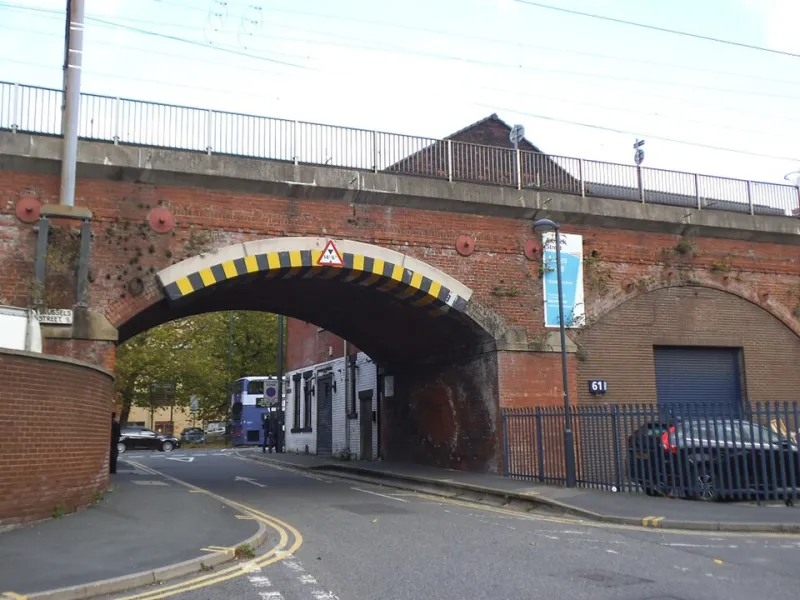
Photo: Stephen Craven , CC BY-SA 2.0, via Wikimedia Commons
You hear the train before you see the art. Somewhere above the ceiling tiles a service out of Liverpool Street grinds over the points, a sift of dust drifts down onto an empty plinth, and nobody in the room looks up. The invigilator has timed her coffee to the timetable. On the wall, a big, badly behaved painting that would look absurd in a white cube off Cork Street seems to be enjoying the noise.
Britain has thousands of railway arches and a stubborn habit of putting interesting things inside them: garages, bakeries, climbing walls, rehearsal rooms, barbers. And, more quietly, some of the most watchable art spaces in the country — run by people who could not begin to afford the rent three streets over.
Why the arches keep winning
The economics are not complicated. Arches are dark, damp, hard to heat, expensive to insure and frequently come with a short lease and a landlord already eyeing a break clause. Which is precisely the combination that keeps them available to people with ideas and no capital. A commercial gallery in EC2 needs to sell work to stay open. A project space under a viaduct in Salford needs to fill a room on a Thursday and not much else.
The architecture does half the curating. An arch is a hopeless place to hang pictures conventionally — no corners, no right angles, a curve that dares you to either ignore it or fight it. So people fight it. You get installations built to the span, sound pieces that lean into the rumble, sculpture that has to be craned in through a shutter. Constraints make a show legible in a way that endless white wall sometimes doesn't.
Then there's the noise. The lazier spaces treat the trains as an irritation to apologise for. The better ones treat the timetable as part of the score. There is something honest about art that has to compete with infrastructure rather than being insulated from it.
Three arches worth a Saturday
Village Underground, London
Four retired Jubilee Line carriages parked on a Shoreditch roof, a warren of brick arches below, and a programme that refuses to pick a lane between gallery, gig venue and workspace for people who make things with their hands. The joy here is the layering: you arrive for a show, end up in a courtyard, stay too long. Best visited mid-afternoon, when the light through the shutters goes briefly cinematic and nobody has started queueing yet.
The White Hotel, Salford
Scuffed, unreconstructed and gloriously unbothered, this is the arch that most resembles a dare. Line-ups go up late, the room smells of the building itself, and the work tends towards the awkward and the unpolished — which is a compliment. If your idea of a good exhibition is one you have to think about on the bus home, this is your sort of place. Bring a coat. Bring cash.
SWG3, Glasgow
What began as a party in a railway arch has grown into a sprawling complex, but the arches are still where the oddest things happen — the small rooms, the corridor shows, the bits nobody puts on the poster. It is a useful reminder that these spaces rarely stay small, and that Glasgow has a long, loud history of turning industrial leftovers into culture. Go for the main billing, then wander into whatever is happening in the back.
Honourable mention to Leeds, where the Dark Arches beneath the station rumble with water and trains and occasionally something worth standing still for. And to Bristol, Sheffield and Newcastle, where the same arithmetic — cheap rent plus awkward geometry — keeps quietly producing good rooms.
The catch nobody photographs
Arches are a lease, not a guarantee. Network Rail has spent years tidying up its estate, commercial rents have climbed, and developers have discovered that a viaduct makes a lovely backdrop for flats. Glasgow's Arches closed in 2015 after a licensing battle, and the lesson stuck: the spaces that feel most permanent are often the most fragile.
So the good ones tend to be entrepreneurial about it — pop-ups, shared tenancies, a bar that subsidises the gallery, a shop that sells prints so the back room can show something difficult. It is not romantic. It is just what survival looks like when the building belongs to somebody else.
How to visit well
Check the opening hours on social media before you travel, because they are often a rumour. Go on a weekday if you can; arch spaces are at their best with four people in them. Buy the risograph print, put something in the donation tin, and if a show is genuinely baffling, say so to the person invigilating — they have heard worse and will probably enjoy arguing.
And when the train goes over, don't apologise for the interruption. It's part of the architecture.