Brushwork on Brick: Why Britain's Shopfront Letterers Are Having a Moment
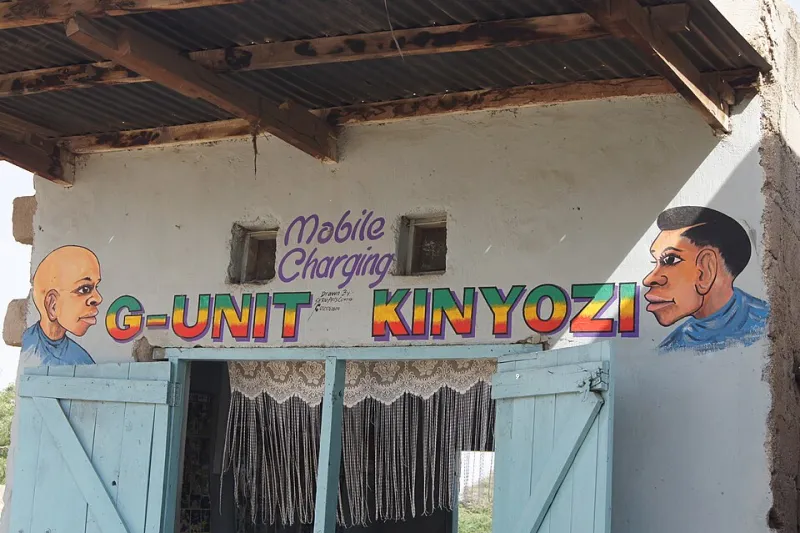
Photo: CaptChandra, CC BY-SA 4.0, via Wikimedia Commons
Walk down a high street in Leeds, Bristol or Glasgow and the eye is trained to skip the shopfronts. We read the logos; we rarely read the letters. But once you start noticing hand-painted signage — the sort with a visible brush edge and a shadow mixed by a person rather than a template — it becomes hard to unsee. Somewhere between the squeeze on small businesses and the slow retreat of the identikit chain, a quiet revival of British signwriting has taken hold. Much of it is happening at street level: on fascias, market stalls, café windows and studio doors.
The case for the wobbly edge
Vinyl is cheap, fast and perfectly even. That is precisely the problem. A printed sign is a file; a painted sign is a decision. Someone stood in front of that wall, worked out how wide the letters needed to be, mixed a colour to suit the brick, and got it slightly wrong in a way that reads as human.
There is also the question of trust. A hand-lettered shopfront says, quietly, that the person inside cared enough to commission something. It is the visual equivalent of a handwritten note instead of a mail merge. In a market where every brand is trying to look artisanal, actual artisanship still carries weight.
Three workbenches, three approaches
Priya Raman, North Lane Lettering, Leeds
Priya came to signwriting from a graphic design background and a Saturday evening class at a local college. Twelve years on, most of her work is shopfronts, though she still paints the occasional market board. 'People think the hard part is the lettering,' she says. 'It's not. The hard part is the wall. You have to read the surface, the light, the listed-building officer's mood.'
Her palette tends toward deep greens, oxblood and a soft cream she mixes herself. She quotes a one-colour fascia at around £450, rising to £1,500 or more for anything involving gilding or glass.
Tom Vickery, Vickery & Daughters, Bristol
Tom trained under a signwriter who had been working since the 1970s and now shares a workshop with a framer and a bookbinder. His speciality is traditional water gilding on glass — the gold leaf that sits behind the window and catches the light at an angle. 'It looks expensive because it is,' he says cheerfully. 'But it lasts thirty years if nobody knocks it over.'
He charges a day rate in the region of £350 and is wary of clients who want the look without the budget. 'I'd rather do a small, beautiful job than a big, compromised one.'
Isla Macrae, Macrae Lettering, Glasgow
Isla paints market stalls, café windows and studio doors, often in a looser, more decorative style with a nod to Gaelic letterforms. 'A stall doesn't need to look corporate,' she says. 'It needs to look like it belongs to a person.' Her small boards start around £120, which makes her work a realistic first commission for a market trader or a studio share.
What it costs, and why
Signwriting is not cheap, and it is worth being honest about that. A modest fascia can be done for a few hundred pounds; a full shopfront with gilding, glass work and a difficult listed building can run into four figures. The cost sits in preparation, access, and the years it took to learn to draw a letterform freehand.
What you are buying, in the end, is a small piece of public art that also happens to sell bread, records or haircuts. That is a strange and rather lovely thing for a high street to contain.
A field guide to reading a shopfront
You do not need to be a letterer to spot good work. Look for these:
- Consistent stroke weight. Thick strokes should stay thick and thin strokes thin, without the wobble of someone guessing.
- Spacing that breathes. Good signwriters space letters by eye, not by ruler. If the gaps feel even but the letters look cramped, something is off.
- A shadow with a direction. Painted drop shadows should obey a single light source. Two shadow directions on one sign is a tell.
- A restrained palette. Two or three colours, usually mixed rather than picked from a swatch book.
- Evidence of the brush. A slightly soft edge and the faint texture of the wall underneath are good signs.
- Honest repair. A touched-up letter or a patched corner often means the sign is loved, not neglected.
Trust, written in paint
The revival is not nostalgia for its own sake. It is a practical response to a high street that has been flattened by sameness. A hand-painted sign will not save a business, but it does something subtler: it makes a street worth looking at again. Next time you are waiting for a bus, look up at the fascia opposite. Someone painted that. Probably in the rain.