The Gift Shop as Taste Test: Eight Museum Shops Worth Your Time
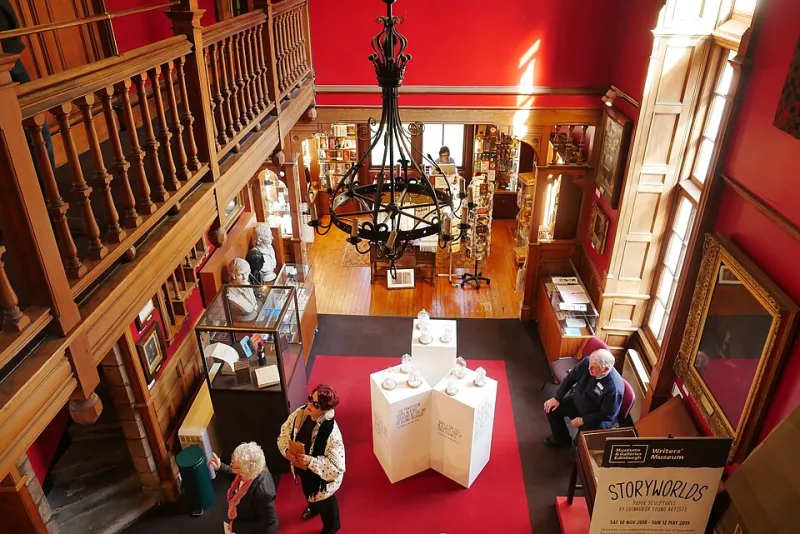
Photo: Sgerbic, CC BY-SA 4.0, via Wikimedia Commons
Museum shops used to be an afterthought: a rack of postcards, a pile of jigsaws, a tea towel with a painting on it. Some still are. But over the past decade the best of them have become something more interesting — a public statement of institutional taste, assembled by buyers who care and often made by people who live nearby.
A good shop tells you whether a museum trusts its audience. A bad one tells you it thinks you want an umbrella. Here are eight worth the detour in 2026, chosen because the objects are well designed, the artist editions are real, and the shelves are not simply airport tat with a logo on it.
1. Kelvingrove Art Gallery and Museum, Glasgow
The shop here has quietly become one of the best in Scotland for local ceramics and jewellery, with a strong line in Scottish makers who would otherwise be hard to find outside a craft fair. The museum's own collection inspires some prints, but the real strength is the independent stock.
Buy: a small stoneware vessel from a Glasgow potter. Avoid: the novelty tartan everything near the till.
2. The Whitworth, Manchester
The Whitworth has a textile collection to die for, and the shop leans into it properly — scarves, household textiles and small printed pieces made with real attention to pattern. It also carries artist editions at prices that feel considered rather than cynical.
Buy: a printed textile from a northern studio. Avoid: anything that treats a wallpaper pattern as a personality.
3. Bluecoat, Liverpool
A contemporary arts centre in a beautiful old building, Bluecoat's shop is small but well edited, with a print studio connection that means you can often buy work by artists who have exhibited upstairs. It feels like a shop run by people who know the makers personally.
Buy: a screenprint from the studio programme. Avoid: generic city-skyline merchandise.
4. Ikon Gallery, Birmingham
Ikon has long been good at artist books, and its shop is one of the more reliable places in the Midlands to find small-press publications, editions and thoughtfully chosen design objects. The selection is spare rather than sparse.
Buy: an artist book you have never heard of. Avoid: the temptation to buy a tote bag as a substitute for a decision.
5. Kettle's Yard, Cambridge
Kettle's Yard is a house museum built on restraint, and the shop understands this. Expect ceramics, simple wooden objects, good stationery and a carefully limited range of gifts that would not look out of place on a shelf in the house itself.
Buy: a plain, well-thrown mug. Avoid: anything that shouts.
6. Towner Eastbourne
Towner has a strong graphic identity and a shop that reflects it, with Sussex makers, prints and small design objects. It is the kind of place where you go in for a card and leave with a present for someone you actually like.
Buy: a print by a South Coast artist. Avoid: the jigsaw of the exhibition poster.
7. Newlyn Art Gallery & The Exchange, Penzance
Cornwall's artistic heritage is often reduced to a cliché, but the Newlyn shop resists that, stocking work by contemporary Cornish makers alongside prints and small editions. It is a useful antidote to the pasty-and-pirate version of the county sold elsewhere.
Buy: a piece of contemporary Cornish ceramics. Avoid: anything with a fake fishing net attached.
8. Spike Island, Bristol
Spike Island's shop is plugged directly into its studio community, which means ceramics, prints and small objects from artists who actually work in the building. It is the closest thing on this list to buying straight from the studio floor.
Buy: a small ceramic piece from a studio holder. Avoid: assuming the cheapest item is the most tasteful.
How to read a shop in ninety seconds
Walk in and look at the first table. If it is covered in mugs printed with a famous painting, turn around. If it is covered in objects you cannot immediately identify, stay. Then check three things: whether the labels name the maker, whether the artist editions have real prices rather than a polite enquiry, and whether the staff can tell you where the ceramics come from. A shop that can answer those questions is a shop doing the work.
The best museum shops are not shops at all, really. They are the institution's taste made visible — and sometimes the most honest thing in the building.