Cabbages, Clip Frames and Quiet Judgement: A Field Guide to the Allotment Shed Show
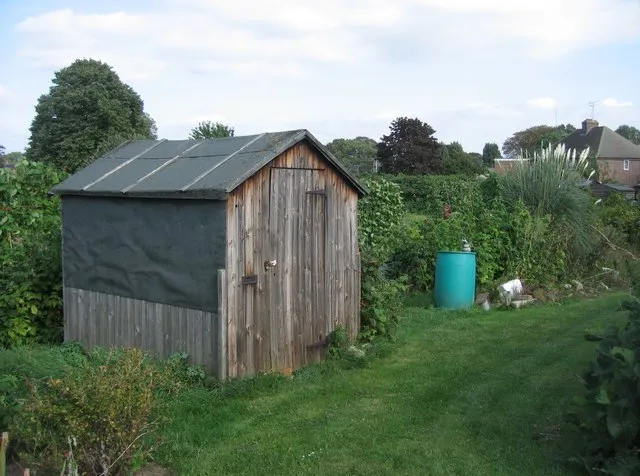
Photo: Sebastian Ballard, CC BY-SA 2.0, via Wikimedia Commons
I want to make a case that will annoy at least two professions. Britain's allotment holders are better curators than a fair number of people with a salary and a mailing list. And the shed show — that odd, moving, mildly competitive display of things hung on a shed wall for no audience beyond the neighbours — is one of the most instructive forms of exhibition-making we currently have.
Bear with me.
The shed as a white cube with better ventilation
A white cube's great claim is neutrality. A shed's great claim is honesty. It has a window, a rake, a jar of screws, a chair nobody sits in, and a wall that has been painted so many times the brush marks read as texture. Into this space goes: a photograph of a prize-winning onion, a watercolour of the plot as it looked in 1994, a laminated poem about rain, a rosette, a child's drawing of a scarecrow.
Nothing about that arrangement is neutral, and that's the point. Every object is there because someone decided it had earned its nail. There is no theme statement. There is no sponsor. There is just a lifetime of small judgements made in public, at close range, by a person who will be asked about it while holding a hose.
That's a curatorial act, and it's a braver one than most. Try hanging something in a group show and standing next to it every Saturday morning for six months while people say 'hmm' and walk off.
Seasonal programming, whether you like it or not
The plot calendar is ruthless and completely non-negotiable. March is seed packets, pencilled plans, and a strange optimism. July is abundance and the show season. September is the table of produce arranged on a trestle with a paper tablecloth, judged on criteria nobody outside the community fully understands. December is fairy lights, a bit of tinsel, and a shed that looks like a small, well-meaning cathedral.
Compare that with the average gallery year: two big shows, a group thing in the summer, something safe before Christmas. Fine, but the plot calendar is genuinely responsive. It changes because the world changed — frost, blight, six weeks of no rain — not because the funding cycle moved.
Programming to a season rather than to a spreadsheet is a discipline. It means what's on the wall can't be a lie about the conditions of its making.
Scarecrow festivals and the rogue installation
Then there's the scarecrow trail, which is the closest thing rural Britain has to a biennial. Forty scarecrows, one village, a printed map in the shop, and a judging sheet that takes itself exactly as seriously as it needs to.
What's interesting is the range. There's always a Paddington. There's always one entry that is genuinely unsettling — something with a real coat and a face made of a dust sheet that you see on a walk home and think about later. And there's always one that has gone too far: a full structural build, a lighting rig made of a bicycle lamp, a narrative.
That one is the rogue installation. It has broken an unspoken agreement about effort. It will be discussed. It will probably win. It will definitely be mentioned in the pub with a slight edge.
This is criticism, functioning properly. Not a review in a listings magazine — a village-scale consensus about whether someone has shown off. There's a lesson in there about how taste actually gets negotiated, and it has nothing to do with a press release.
The critique is a courgette
Here's the part I find genuinely useful. Plot holders critique each other constantly, but almost never in a language of taste. They critique in yield, in tidiness, in whether a thing survived. 'That's done well.' 'You've had trouble with that.' 'That's a lot of work for a small return.'
It is, if you squint, a formalist reading of a display: what was attempted, what was achieved, what the conditions were.
And unlike most art criticism, the person who made the work is standing right there, holding a marrow, and can respond.
Rules for hanging a show behind a padlock
For anyone tempted to treat the plot-gate gallery as a template — and I think you should — the working principles seem to be:
- Hang for the person walking past, not the person who came to see it. The audience is on their way somewhere. Earn the pause in three seconds.
- Weather is part of the frame. Anything that can't survive damp, sun or a fox is a bad idea. Choose materials that age rather than fail.
- One thing per nail. Shed walls don't do salon hangs. The single object with room around it reads as confident; five objects crammed together read as storage.
- Label in your own voice, or not at all. The best captions I've read on a plot gate were four words, handwritten, and slightly rude.
- Let it be judged by people who know the conditions. The neighbour who has watched you dig that bed is a more useful critic than any visitor with a tote bag.
No private view, no problem
The thing the allotment show has that almost no gallery has is continuity of audience. The same twelve people see it every week for months. They notice the incremental changes. They remember last year.
That's a relationship, not an event. And no amount of free warm white wine has ever bought it.
So yes, I'm serious. Take the shed show seriously. Bring a flask, mind the hose, and don't touch the onions — they're being judged on Saturday.