The Three-Night World: Exhibition Design Lessons From the Village Hall Scenic Crew
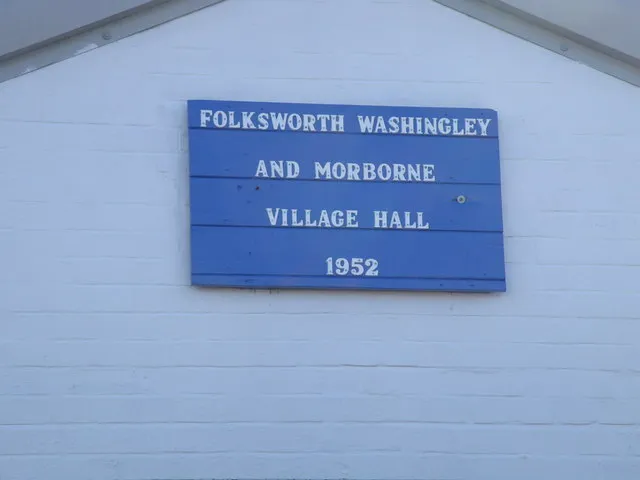
Photo: Michael Trolove, CC BY-SA 2.0, via Wikimedia Commons
I spent a damp Saturday in November in a village hall in the sort of place where the sat-nav gives up and the church noticeboard does the rest. The occasion was not a wedding or a jumble sale but the get-in for an amateur dramatic society's autumn production. By lunchtime, a stack of hardboard had become a cottage interior, a charity-shop standard lamp was standing in for French windows, and a retired electrician was explaining why the lighting rig would be fine as long as nobody breathed near the dimmer. It was exhibition design by other means, and it was quietly brilliant.
The Flat Is a Lie That Tells the Truth
Am-dram scenery is built to be read, not inspected. A painted flat — that great sheet of scenery, usually hardboard or canvas on a timber frame — does not pretend to be a real wall. It pretends to be a wall from row twelve. Brush strokes are broad. Shadows are painted in. A fireplace might be a shelf, a bit of architrave and a carefully stencilled brick pattern. Up close it is nonsense. From the audience it is a room.
That is the first lesson for exhibition designers: legibility beats fidelity. A gallery may have the budget for CNC-cut plywood and conservation-grade lighting, but it can still forget that most visitors meet an exhibition from a distance and at speed. The village hall crew know that the story has to land before the details do. They build for the back row first and worry about the front row second. It is not a compromise; it is a hierarchy of looking.
Budget Is a Material
The scenic crew's budget would not cover a decent coffee run for a design studio. So they treat economy as a material in its own right. Hardboard is braced with reclaimed timber. Old curtains become a backdrop. A sofa arrives from a member's spare room with a note attached: please do not sit on it, it is holding together by habit. The props table is a masterpiece of charity-shop curation — a rotary telephone, a chipped teapot, a framed picture of somebody's aunt — each object chosen because it reads as period from ten metres away.
Exhibition designers often talk about value engineering as if it were a defeat. The village hall offers a different model: value as a design constraint. When you cannot buy your way out of a problem, you make the problem part of the language. A painted backdrop is not a failed photograph. It is a deliberate surface. A borrowed lamp is not a compromise. It is a prop with a history. The result feels specific because it is specific — not because it is expensive.
Sightlines Before Spectacle
The get-in has a rhythm that would be familiar to any exhibition technician. First the big moves: flats up, rostra levelled, the borrowed sofa positioned. Then the smaller corrections: a sightline from the back corner, a lamp that glares from the left, a door that needs to swing without hitting the set. Nobody talks about the concept. They talk about whether the audience will see the action.
That practical, body-first thinking is worth stealing. Exhibition design can become so preoccupied with the narrative arc that it forgets the visitor's actual path through a room. The am-dram crew test the set by walking it. They sit in the cheap seats. They ask the person who will be selling programmes whether they can see past the fireplace. It is evaluation by wandering about, and it works.
The Prop Is a Prompt
Amateur theatre is full of objects that do two jobs at once. A telephone is a telephone and a signal that someone is about to receive bad news. A suitcase is luggage and a marker of departure. A tea tray is props and comic timing. The set builders know that the audience will read the object before they read the paintwork. So they choose props that carry a plot.
For exhibitions, that is a reminder that objects are not illustrations. They are prompts. A single well-chosen thing — a worn glove, a shop sign, a folded letter — can do more narrative work than a wall of interpretation. The village hall crew would never dream of labelling a prop. They trust the audience to lean in. Exhibition designers could borrow a bit of that confidence, and a bit of that restraint.
Repairable, Borrowable, Repeatable
Nothing on a village hall set is precious. If a flat wobbles, it gets a new brace. If a lamp fails, someone's cousin has a spare. If the paint chips, it gets touched up with whatever is in the tin. This is a culture of maintenance, not preservation. It assumes that things will go wrong and builds in the means to fix them.
That is an underrated exhibition principle. So much gallery design is conceived as a finished object, sealed and signed off. The village hall model is a living system: borrowed, patched, stored, reused. It is not necessarily how you would treat a Vermeer, but it is a useful way to think about temporary exhibitions, community displays and the kind of projects that need to survive a three-night run and a Sunday matinee.
The Tea Urn Test
The final test of any amateur set is not the dress rehearsal. It is the interval. Does the world hold when the lights go down and the audience files out for tea and a biscuit? Can the volunteers reset the props without knocking over the fireplace? Does the borrowed sofa survive a hundred bottoms? The tea urn is the real client.
Exhibition design could use a tea urn test of its own. Not everything has to be permanent. Not everything has to be perfect. But the thing has to work when people arrive, when they wander, when they leave. It has to be robust enough to be used and generous enough to be forgiven. The village hall scenic crew understand that better than most. They build a world for three nights, then take it down and put the chairs back. The best exhibition designers could learn a lot from that. And they would probably get a biscuit.